

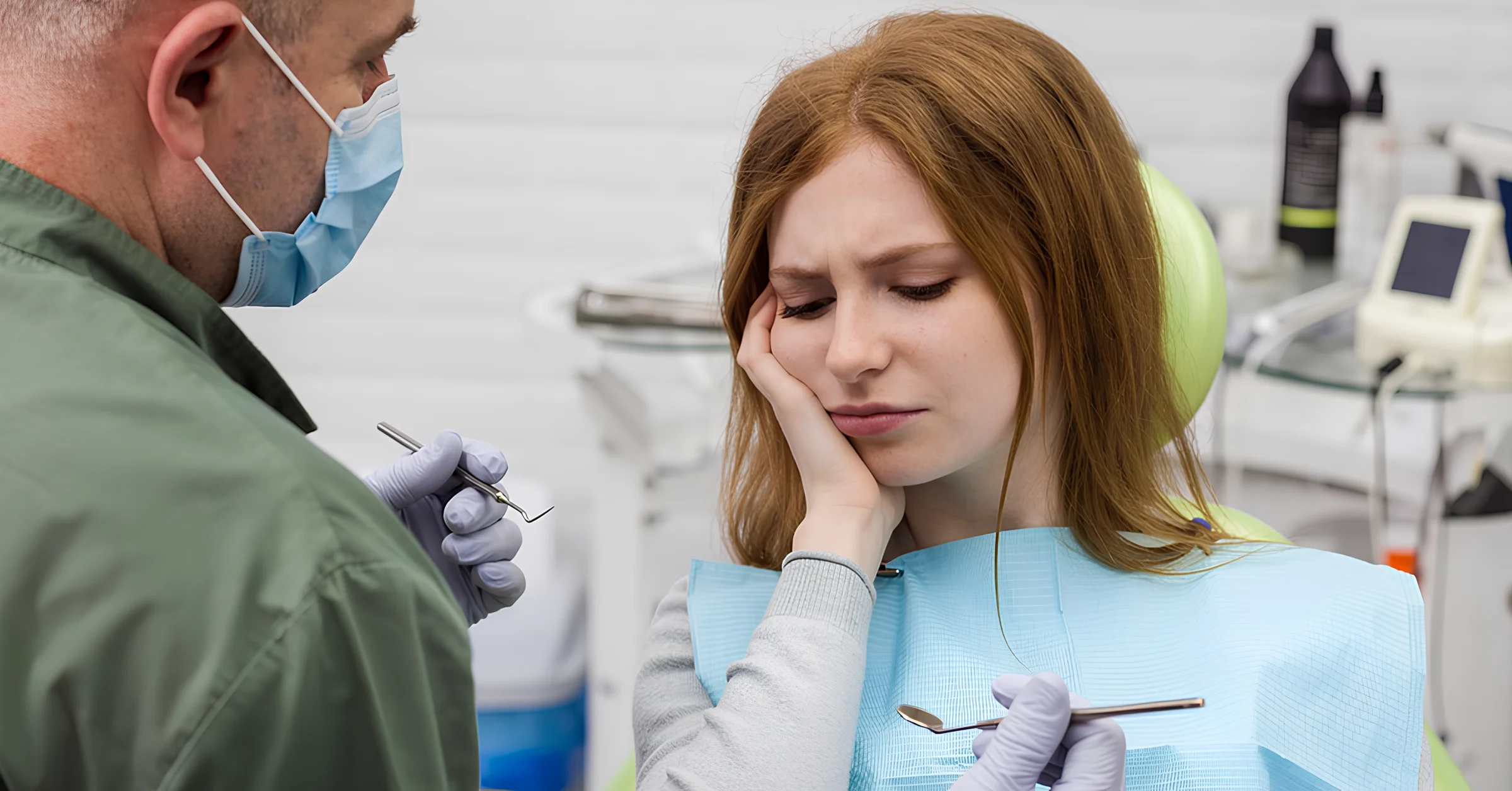
You left the appointment feeling fine, and now your tooth throbs every time you sip coffee or bite into dinner. Tooth pain after filling is one of the most common reasons patients search for answers the same evening, before they even think about calling the office.
Some soreness after a filling is expected. Your tooth was numbed, drilled, and rebuilt in the span of an hour, and the tissue around it needs a few days to settle. At Crownline Dental, we hear this question often enough that we want every patient to know exactly what counts as normal and what does not.
This guide covers what to expect after treatment, how to relieve tooth pain after filling from home, and when discomfort is a sign your tooth needs a second look.
Is It Normal to Have Tooth Pain After a Dental Filling?
In most cases, yes, it is normal to have tooth pain after a filling. For the first few days, mild sensitivity to hot, cold, or pressure is a routine part of healing. The dentist removed decayed tissue and placed a new material directly against a tooth with nerve endings just below the surface, so some irritation is expected while everything settles.
The pattern matters more than the pain itself. Normal sensitivity fades day by day. If your tooth felt sharp on day one but noticeably calmer by day four or five, the nerve is recovering the way it should. Pain that holds steady, worsens, or starts waking you up at night points to something a filling cannot fix on its own, and it usually needs a follow-up visit.
What Causes Tooth Pain After a Cavity Filling?
Tooth pain after a cavity filling usually traces back to one of a few causes. Some resolve on their own, while others need a dentist to adjust.
- Nerve irritation from the procedure. Drilling generates heat and vibration, and the nerve inside the tooth can stay inflamed for several days, especially if the cavity was deep.
- A bite that sits too high. If the filling is even slightly taller than the surrounding tooth surface, your teeth meet unevenly every time you chew, which concentrates pressure on one spot.
- Pulpitis, or nerve inflammation. When decay is close to the nerve before treatment, the nerve can become reversibly or irreversibly inflamed, which changes how long recovery takes.
- A margin that has not fully sealed. This can let bacteria or fluid seep beneath the restoration, causing soreness that does not fade on a typical healing timeline.
- A hidden crack. Sometimes the original tooth had a small fracture that decay was hiding, and pain shows up once the tooth is back under normal biting pressure.
Our dental fillings team walks through each of these possibilities during a follow-up exam, so you are never left guessing which one applies to your case.
Why Pain in Your Jaw After a Tooth Filling Happens
Pain in jaw after a tooth filling is more common with molars, and it does not always come from the tooth itself. The lower jaw and the teeth share overlapping nerve pathways through the trigeminal nerve, so discomfort can radiate outward and feel like it belongs to the jaw, ear, or even the temple.
Keeping your mouth open for an extended period can also strain the jaw joint and surrounding muscles, separate from anything happening at the filling site. If the ache sits more in the joint than in a specific tooth, and it eases with gentle jaw stretches or a warm compress, muscle strain is the likely cause. If it is sharp, one-sided, and tied to chewing, the filling is more likely involved, and the bite should be checked.
How to Relieve Tooth Pain After Filling at Home
While you wait to see if soreness settles, a few simple steps can help with how to relieve tooth pain after filling without making things worse.
- Take an over-the-counter painkiller, like ibuprofen, acetaminophen, etc., following the label instructions.
- Keep using lukewarm foods and drinks for a few days, since extreme heat or cold can trigger sharp sensitivity.
- Chew on the opposite side of your mouth to keep pressure off the treated tooth.
- Use a toothpaste made for sensitive teeth, applying a small amount directly to the area if needed.
- Rinse gently with lukewarm salt water to calm inflammation around the gum line.
- Avoid clenching or grinding, especially at night, since added pressure slows healing.
These steps line up with the oral hygiene habits we recommend to every patient, filling or no filling, since a gentle routine protects the tooth while it heals.
How Long Should Tooth Pain After a Cavity Filling Last?
Most sensitivity resolves within one to two weeks. The table below breaks down what to expect at each stage.
| Timeframe | What’s Typical | When to Take Action |
|---|---|---|
| Day 1 to 3 | Sharp twinges with hot, cold, or sweet foods | No action is needed if the pain is mild and brief |
| Day 4 to 7 | Sensitivity gradually fading | Monitor closely, and contact us if pain intensifies instead |
| Week 2 | Little to no lingering discomfort | Schedule a check if soreness is still noticeable |
| Beyond 2 weeks | Pain should not persist at this point | Call our office for an evaluation |
Warning Signs Your Tooth Needs Professional Attention
Certain symptoms move a filling from routine recovery into a same-day concern. Throbbing pain that intensifies rather than fades, swelling in the face or gums, a fever, or a bad taste near the tooth can all be signs of an infection. Pain that disrupts sleep or radiates toward the ear and neck also deserves prompt evaluation instead of a wait-and-see approach.
Sharp, sudden pain, specifically when you bite down, is another signal worth acting on, since it often means the filling needs an adjustment or the tooth has a crack that was not visible during the original exam. Our emergency dentistry team offers same-day evaluations for pain like this whenever it shows up unexpectedly.
How Crownline Dental Diagnoses and Treats Post-Filling Pain
When a patient calls about ongoing discomfort, our team starts with a straightforward exam. Bite paper checks whether the filling sits too high, a quick temperature test evaluates how the nerve is responding, and an X-ray rules out decay left behind or damage below the surface.
Treatment depends on what the exam finds. A high filling often needs nothing more than a small adjustment to restore an even bite. A filling with a leaking margin may need to be refined or replaced, which our fillings team can usually complete in a single visit. If the nerve is too inflamed to recover on its own, more involved restorative dentistry may be recommended to protect the tooth for the long term.
Preventing Pain After Your Next Filling
You cannot control every variable in a filling procedure, but a few habits reduce your odds of significant discomfort afterward. Keeping up with routine preventive care between visits helps stop small cavities from becoming deep ones, and deep cavities are the ones most likely to cause lingering nerve irritation once filled.
Mentioning any current jaw tension, teeth grinding, or a history of sensitive teeth before your appointment also helps your dentist plan accordingly, whether that means a different filling material or extra time spent checking your bite before you leave the chair.
Don’t Let Tooth Pain After a Filling Linger
A little sensitivity after a filling is normal, but pain that lingers, worsens, or spreads to your jaw is worth a second look. Crownline Dental offers evening and Saturday appointments in King of Prussia, so getting your tooth checked does not mean rearranging your entire week.
Frequently Asked Questions
Mild sensitivity can last up to two weeks, but pain that stays strong or grows worse past that point usually is not normal healing. It often signals a bite issue, nerve inflammation, or a filling that needs adjustment, so it is worth having checked.
Signs of infection include throbbing pain, facial or gum swelling, a fever, or a bad taste near the tooth. If any of these appear, contact your dentist promptly rather than waiting to see if they resolve on their own.
Sleeping with your head slightly elevated can lower blood flow and pressure to the area. Taking an over-the-counter pain reliever before bed and avoiding late-night snacking on the treated side also help limit nighttime discomfort.
Not always. Jaw soreness can come from holding your mouth open during treatment rather than the filling itself. If the pain is sharp, one-sided, and tied to chewing, though, it is worth having the bite and filling checked.
Cold sensitivity is common while the nerve recalibrates after treatment, especially if the cavity was close to the nerve. This typically fades within a week or two, and sensitivity that persists longer deserves a follow-up visit.
Pain isolated to biting pressure often points to a filling sitting slightly too high. This is usually a quick fix and one of the most common reasons patients return shortly after treatment.
Yes, over-the-counter ibuprofen or acetaminophen is generally appropriate for mild post-filling discomfort when taken as directed on the label. If pain needs medication beyond a few days, schedule an evaluation instead of continuing to manage it at home.
Call if pain worsens instead of improving, disrupts your sleep, comes with swelling or fever, or is sharp specifically when biting down. Same-day appointments are also available for urgent concerns like these.